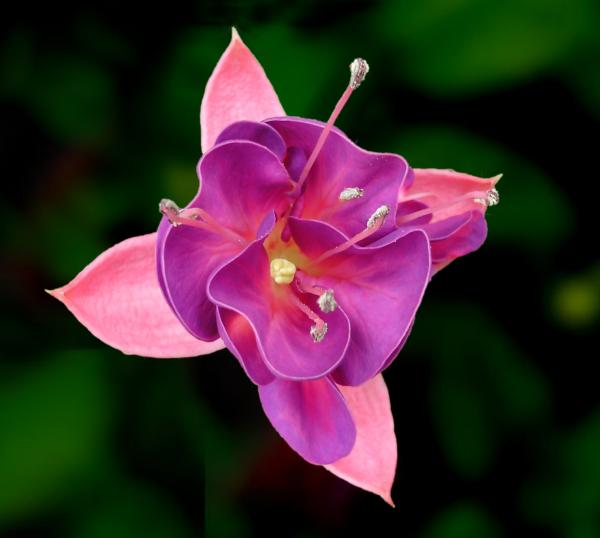
Pink + Purple ==Fuchsia(a new Operating System)
For years, Google has developed two operating systems side-by-side in Android for mobile devices and Chrome OS for laptops and desktops. But it looks as though Google now has a third operating system project underway known as Fuchsia.
Although Google isn't revealing much, Android Police dug into the documentation for the project on GitHub and discovered more details about the OS. The biggest takeaway, Android Police notes, is that Fuchsia's kernel, known as Magenta, is designed to work across a wide range of devices—from small "embedded devices" all the way up to desktops and laptops.In addition, Fuchsia makes use of Google's Dart programming language, as well as the company's Material Design-friendly Flutter user interface framework.
Enter “Fuchsia.” Google’s own description for it on the project’s GitHub page is simply, “Pink + Purple == Fuchsia (a new Operating System)”. Not very revealing, is it? When you begin to dig deeper into Fuchsia’s documentation, everything starts to make a little more sense.
First, there’s the Magenta kernel based on the ‘LittleKernel’ project. Just like with Linux and Android, the Magenta kernel powers the larger Fuchsia operating system. Magenta is being designed as a competitor to commercial embedded OSes, such as FreeRTOS or ThreadX.
However, Magenta is designed to scale much better, enabling Magenta to work on embedded devices, smartphones, and desktop computers. For this to happen, Magenta improves upon its LittleKernel base by adding first class user-mode support (a necessity for user accounts) and a capability-based security model (which would enable something like Android 6.0’s permissions to work).
But that’s just the kernel; what about the rest of the OS? It looks like Google is using Flutter for the user interface, as well as Dart as the primary programming language. The icing on the cake is Escher, a renderer that supports light diffusion, soft shadows, and other visual effects, with OpenGL or Vulkan under the hood. Shadows and subtle color reflections are a key component of Material Design, so it seems Flutter and Escher could be designed for the Material Design UI in mind.