

Tim: Great, thanks.
Tim: Well, originally, “Abandoned Dancehall Dreams” was an album that I imagined as being released as a No-Man album. It started the same way like “Schoolyard Ghosts” did. So, I prepared material and co-wrote material talking to Steven (note: Wilson / Porcupine Tree) with the aim of it becoming the next No-Man album but due to other commitments by Steven, in the end all he could do was offer to mix it as he could not commit to a full No-Man album.
He suggested that I use these ideas and turn them into a solo album and although I was initially disappointed in the end it was a great opportunity for me to produce something that I am quite proud of on a larger scale so I took on the opportunity. The main difference with this is that, the one thing I think that No-Man and to a certain extent “Abandoned Dancehall Dreams” is that it’s music written at a slightly more cinematic scale than a lot of what I do.
A lot of what I do is quite intimate in my collaborations, if I’m working with people like Peter Chilvers, for example, it turn sounding more like a singer/songwriter thing whereas with No-Man and “Abandoned Dancehall Dreams” there’s a far wider scope in terms of production and ideas. So yes, when I realised that I already had the basis for the album I took it on and developed it as a solo project. I felt quite excited about the possibility of really getting the right musicians to perform in the right songs and it really ended up becoming a six month labour of love as well as a great learning process.
Tim: It would indeed have been much different had it been a No-Man album. One example is the song called “Schoolyard Ghosts” which I don’t know if you know, is from a Memories Of Machines album (note: “Warm Winter” – 2011). I had originally written that for the No-Man album called “Schoolyard Ghosts” but apparently Steven didn’t…like the pace of it, although it had a really good melody.
So, what we did was that we completely slowed the piece down and I re-wrote the melodies and lyrics and it ended up becoming a track called “Mixed Tapes”. That gives you one idea of how Steven completely changed the material I brought to him. I am sure that, had Steven been involved, I would have guessed that he would get a sense of it and would not have left it the same way that I developed it.
I am 50% sure that he would have had other ideas on how to treat the music and, in some respects, “Abandoned Dancehall Dreams” is my personal idea on what a No-Man album could be or should be. So, perhaps what you get is my input into a No-Man project with “Abandoned Dancehall Dreams” and that’s not to say that it isn’t intimate. My music taste is such that I like the epic just as much as I like the intimate, so “Abandoned Dancehall Dreams” is certainly as personal to me as any album that I’ve made and, in terms of the writing, I probably never written more music for an album than I have on this one.
So, it’s very much a solo album compared with other projects that I have been involved. If this had been a No-Man release, a few of the pieces would have been developed differently. I am sure that Steven would have had a different take on the song “Waterfoot”, for example, which is on this album. It’s an acoustic piece with a string quartet to which I am sure he would have added some electronics had he been given the chance.
Tim: To me, even the album structure is important. It may sound stupid but it actually took me a month of careful listening to actually sequence the album because, although individual songs are very important, I equally think that the way that an album develops is important.
This is something that I’ve always taken very seriously, and that is the reason why a few tracks were actually dropped from the album. It wasn’t because I necessarily thought that they were weaker, it was because I thought that, with them, the album would have been weaker. I think that sometimes you have to be quite ruthless in order to produce the work in order to have it sound stronger, if you know what I mean.
It was, as I said, a labour of love and I basically immersed myself in it, getting the musicians I wanted to play on the tracks and sequencing and mixing the music. I am not sure how arduous it was to Steven; I was certainly going back a few times and he was incredibly patient and generous with his time. On some of the pieces we were certainly on mix eight or nine!
Tim: I even dropped the title-track for that reason. The song “Abandoned Dancehall Dreams” is now only featured on the bonus disc and I dropped it because, sonically, it didn’t sound quite right. This was one of the few pieces where the demo was just me singing over my instrumentation but it simply didn’t feel and didn’t sound right in the context of this album.
Another piece that was dropped was called “The Sweetest Bitter Pill” and that was a full band performance with string arrangements again from Andrew Keeling. It sounded quite good but, wherever I placed it in the album, it didn’t quite fit. So, it wasn’t that I disliked the piece in itself; it’s just that it was really crucial to have each song working in unison with the other and that is why “The Sweetest Bitter Pill” ended up as well on the bonus disc.
I think that, generally, if you have music that is quite intense and quite detailed, the old-fashioned forty to forty-five minute album is still, in a way, the best format for music of such intensity. Even though I love the CD, its age ushered at a time when people were making seventy minute albums where they were throwing everything into the mix. I think that, to a certain extent, the CD age destroyed the flow of albums as it meant that people were often adding songs into the mix just for the sake of it!
Are you not afraid that the average listener out there will not experience listening to “Abandoned Dancehall Dreams” the way you meant them to?
Tim: I believe that the only thing you can do is to make what you believe is the best work you’re capable of. As a format, the one I used here is the one that still satisfies me and, like you, I love top listen to an album from start to finish and sometimes as well, even the albums that confuse you initially make sense after the fourth or the fifth listen.
You’re right; obviously downloading, streaming, YouTube, etc, this is the enemy of that kind of consistency and one of the things about the Internet and the digital age is that we’re inundated with new things and because there’s such a massive appetite, a lot is thrown at us.
I am under the impression that a lot of the stuff that’s thrown at us was not given the time and the attention that it should by its creators. Equally the people who listen to music, due to busy day to day lives and the nature of the information coming to them from everywhere do not spend as much absorbing things as they used to.
That is also partly responsible for the death of the book, although platforms like the Kindle have rejuvenated the desire to read in some people. So yes, I am aware of who my enemies are but the only thing that I believe you can do is to produce what you personally believe in and think you’re best capable of and that is what I tend to do.
Tim: Whenever I go into writing an album or a song I never think about an intended audience. I think it’s important in some ways, to make music that communicates because, obviously, as musicians we make music that we want to reach people and I suppose touch people with music in a way similar to the one that as we were touched, whether by music, films or books.
There’s maybe that intention, not an intended style or audience that I think of when I go and write music. I just write from an emotional perspective and I guess that ideas or songs may come from a lyrical basis, from a melodic theme or just a guitar passage that I have come up with.
Then I become absorbed by that and try to develop it further. While I’m writing it I’m certainly not thinking that I am going to make something that will appeal to a Progressive or a Rock audience. I think that with the nature of the influences that I have and the people that I work with there’s no doubt that there’s some appeal and a quality of Progressive music in what I do.
I wouldn’t call it Progressive in the old-fashioned or the new sense but there’s no doubt that there are influences from that style of music in what I do. I am a huge fan of the likes of Peter Gabriel, King Crimson, Kate Bush and I am sure that aspects of such a taste comes through in my music but I don’t write necessarily to satisfy people who listen to that stuff. In general you could say that the people who listen to No-Man are more Art Rock & Progressive Rock and these are the people that will, most likely, be interested to my album.
Tim: Well, I sort of did both. What I tend to do is provide the player with very specific ideas of what I expect from a song and then I’ll say “right, you do what you feel”. So, I work with both approached in mind so I get what I want and then I also get what they feel that fits, their interpretation of what I mean to say through my music.
As a rule it’s 80-90% of what I wanted and 10-20% of their creative input. I think that in the case of Colin, for example, I used him in a couple of pieces playing in a style he doesn’t often play or that he enjoys playing.
He actually loves playing the fretless bass and is a huge fan of people like John Giblin (Simple Minds) and Mick Karn from the John Martin band so I think that he was delighted to be allowed to play in a certain style that he normally doesn’t. Pat Mastelotto is an amazingly powerful drummer.
I would give him the idea on how I wanted the songs to be interpreted and he would add his own character and energy into it. There’s some fantastically loose playing on the album – very impressive stuff.
It’s a combination of ways but mainly what I am asking the musicians to do for me, still, the songs do allow a certain level of freedom to the musicians – the guitar solos in particular. Those players who were given instructions, what you got from them was definitely their character so it’s working within certain instructions but with a given freedom that enabled the musicians involved to express themselves through their performances.
Tim: Well, I am already rehearsing with a band. It’s me with members of Henry Fool and Colin Edwin on the bass and we are performing more than half of the album live. It’s been really exciting because it’s taken the No-Man approach so we will do anything but replicate the studio recordings.
I kind of feel that when you’re playing live you’ve got to play on the strength of the live band that you’re with. Sometimes bands are very good in particular approaches and not particularly competent on others, so you work on the strength of the musicians that you have.
This is quite an interesting band and this is partly through Colin’s involvement that’s made this sound very different to a No-Man live band. We are working toward giving two performances in the UK, one gig in London and one gig in Yorkshire in July. We will be playing in the Netherlands in September and we had offers to do some German and Polish gigs as well.
Obviously, I would love to play in other parts of the UK as I am from the north west of England and I have not played in places like Manchester since 1993 which is a hell of a long time. It would be fantastic to go back.
We once did a fantastic gig in a venue at Manchester called PJ Bells and I’ve had fun memories of that show as most of my early bands were centred on Manchester and Liverpool. I am hoping to do more shows in late 2014/early 2015 which sound an awful long time away but we will do our best to make it happen.
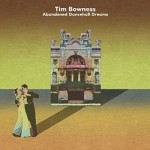
TIM BOWNESS – Abandoned Dancehall Dreams
Tim: Obviously, whenever I complete a specific body of work I, of course, want it to touch people in some ways so getting a positive feedback from people like I got from you today is always good (laughs).
Now, in terms of a broader plan, I suppose I’d like to think that this establishes my identity more. I think that, because I have worked a lot as a collaborator in a lot of different projects, I have often hidden behind band names and behind project names which often contained a lot of personal work.
Of course, because they are collaborations, my input is…’compromise’ is too much of a strong word as I love working with different people but, in some ways, I hope that this album will help establish my identity as a performer and producer and in terms of the kind of music I am capable of making.
I hope that what I have managed to do is to produce something that, in some ways, is as summation of what I’ve done in the past. It actually has the identity and quality of the music that I have been involved in but it also has a few surprises, certain things that people will not be expecting…yes, I think that my hope for it would be to of course reach many people and that in some ways establishes my identity more strongly. I very much like to produce another album and take some of these ideas even further.
I should clarify that when I made my first solo album I followed a much different approach whereas “Abandoned Dancehall Dreams” was something that I came up with and thought of as a whole album before it was recorded and developed further. “My Hotel Year” was a way of combining several collaborations that were not going anywhere.
So what happened was that it was a combination of three or four collaborations that made an album so I never really felt that it was a solo album; I never really felt that I was expressing entirely my ideas through it whereas with “Abandoned Dancehall Dreams” I was given complete freedom to do what I wanted and I hope that I made the most out of that freedom.
I know now that the next Tim Bowness album can be anything it wishes to be and that excites me immensely as a fan! You see, I am the kind of person that wants to be surprised by an artist, I don’t like the idea of ‘safe zones’ when it comes to art. Art has to be daring, it constantly needs to push boundaries and challenge perceptions. I think you have achieved such a thing here and I am sure that any future work bearing your name will reflect that achievement
Tim: Well, it is an interesting point you made here and I am really please that you picked on that as opening new possibilities was one of the things I was aiming for. The album had a lot to do with suggesting new possibilities rather than being an end in itself and that’s what excited me when I was making it.
I could see how this whole thing could move further, how I could develop these ideas. I have been making music since I was a teenager and I still love making music as much as I did. I still love listening to music as much as I did – I haven’t lost that enthusiasm for the possibility of expressing myself through music and I’m lucky that one of the main qualities of the vast majority of the musicians that I work with have is that sense of excitement and the feel that creating music is an ongoing venture.
Tim: Indeed.
Tim: Great. By all means, come and introduce yourself.
Album review:
TIM BOWNESS – Abandoned Dancehall Dreamsng


